
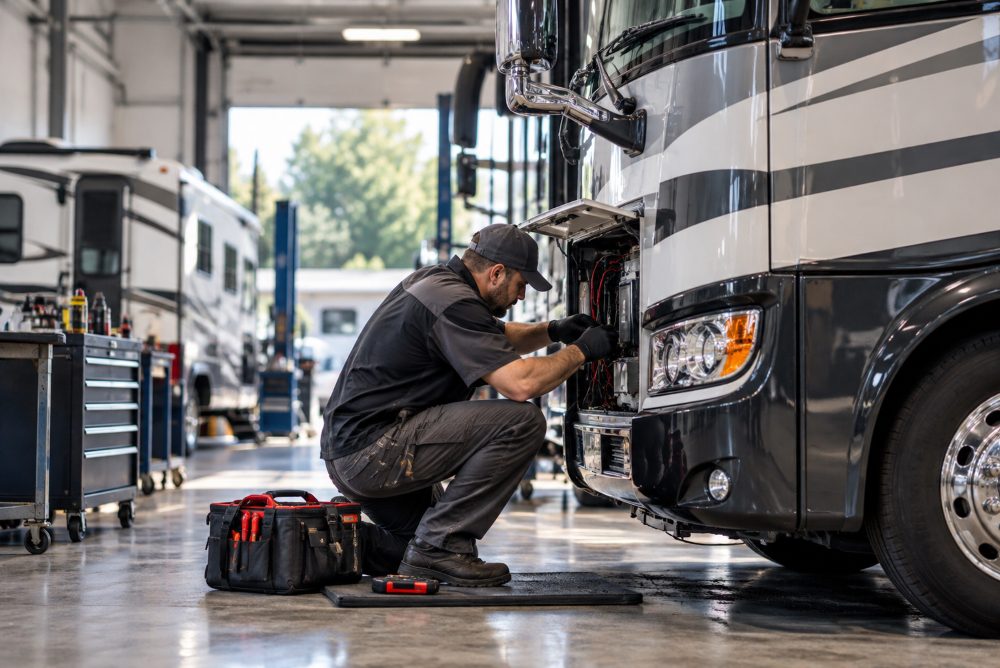
RV problems often start with electrical systems, generators, heating and cooling equipment, leveling systems, brakes, bearings, or the motorhome chassis. Some issues are simple enough to check for yourself. Others—especially problems involving propane, 120-volt electricity, brakes, or active leaks—need professional diagnosis.
PNW Autowork provides RV repair in Albany, OR. This guide covers common RV problems, warning signs to watch for, simple checks you can make, and when it’s time to call an RV repair shop.
What Are the Most Common RV Problems?
The most common RV problems come from six systems: electrical, generator, comfort appliances, leveling, trailer running gear, and the motorhome engine and chassis.
Warning signs can include unusual smells, new noises, breakers that repeatedly trip, warning lights, fluid leaks, weak braking, or changes in how your RV handles. Knowing which system is affected can help you decide what to check first and when to stop troubleshooting.
| System | Warning sign | Time for a shop when… |
|---|---|---|
| Electrical | Dead lights or outlets | Breakers keep tripping or you smell burning |
| Generator | Won’t start or shuts down | Fuel, oil, and breaker checks don’t solve the problem |
| AC, furnace, water heater | No cooling, heat or hot water | The burner won’t light or electrical problems continue |
| Leveling | Jacks stuck or leaking | You see fluid leaks or repeated error codes |
| Trailer running gear | Weak brakes, hot hubs | Braking is weak, a wheel grinds, or a hub overheats |
| Engine and chassis | Warning lights, vibration | A warning light stays on, the engine overheats, or handling changes |
RV System Problems: Warning Signs and When to Seek Repairs
RV Electrical and Generator Problems
If your RV’s lights or outlets stop working, start with the basics. Check the coach battery, battery disconnect, GFCI outlets, and breaker panel. The 12-volt system powers things like lights, the water pump, and furnace fan, while the 120-volt system handles outlets and appliances such as the AC. If a breaker keeps tripping, don’t keep resetting it or open electrical components yourself—have the problem checked by a technician.
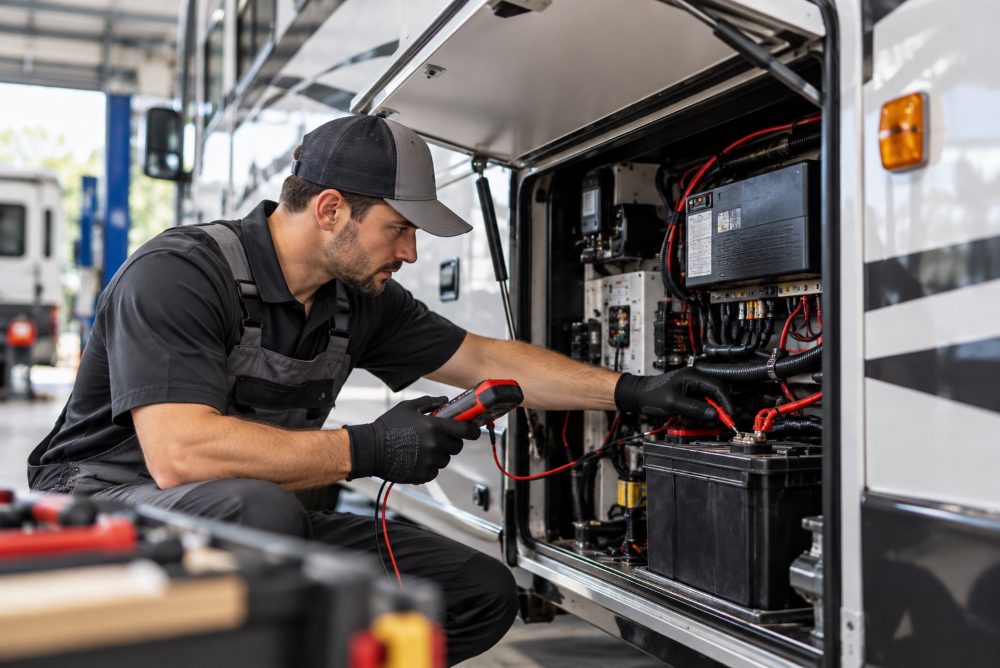
If the generator won’t start, shuts down, or runs without powering the RV, check the fuel, oil, and generator breaker according to the owner’s manual. Never run a generator in an enclosed space because of the risk of carbon monoxide. If those basic checks don’t solve the problem, it may be time for professional Onan generator diagnosis and repair.
RV AC, Furnace and Water Heater Problems
When your RV’s AC, furnace, or water heater stops working, the problem often comes down to one of four things: power, fuel, airflow, or ignition.
Here are a few common signs and what may be causing them:
If you smell propane, stop troubleshooting, leave the RV, and avoid flames, electrical switches, or anything that could create a spark. Have the propane system inspected before using it again.
If the problem continues after these basic checks, have the affected system professionally inspected to find the underlying cause.
RV Leveling System Problems
RV leveling jacks that won’t retract usually point to low battery voltage, a failed switch or control board, a hydraulic fluid or pump problem, or a jack jammed by debris. Confirm the battery voltage, set the parking brake as your owner’s manual requires, and follow the manual retract procedure exactly as written.
Never drive with the leveling jacks down. If you notice fluid leaks, grinding motors, repeated error codes, or bent jacks, stop troubleshooting and have the leveling system professionally inspected and repaired.
Trailer Brakes, Bearings and Axles
Trailer brakes that don’t work properly usually point to the brake controller, a wiring or plug fault, or worn brake components at the wheels.
Watch for these warning signs:
Start by checking the brake controller setting, 7-pin plug, and breakaway cable. Bearing service intervals vary by axle manufacturer, so follow the maintenance schedule in your axle manual rather than relying on a general rule.
Treat any loss of braking as a stop-and-fix issue. Don’t continue driving with the trailer until the braking system has been inspected and the problem corrected.
Motorhome Engine and Chassis Problems
Motorhome engine and chassis problems often start with overdue fluid service and may show up as warning lights, overheating, vibration under load, or a coach that wanders on the road. Because motorhomes can sit for long periods and then travel long distances while fully loaded, worn parts that seemed fine during shorter drives may become more noticeable on the road.
These problems can affect gas and diesel Class A coaches, including diesel pushers, Class C coaches, Winnebago models, and Sprinter-based Class B vans. As a first step, check fluid levels with the engine cool and look for visible leaks. If a warning light stays on, the engine overheats, or the coach begins to wander, it’s time for engine, drivetrain and chassis service.
What You Can Check Yourself vs. When to Call an RV Repair Shop
You can check switches, breakers, fluid levels and connections yourself, but anything involving gas, high-voltage parts or brakes should go to a shop. A simple rule: if the fix means opening something that holds fuel, gas, stored electrical charge or braking force, it’s a shop job. If the same symptom returns after your check, stop repeating it and have it looked at.
Stop right away for these:
- Propane smell or carbon monoxide alarm: get everyone out, then call 911 or your propane supplier from a safe distance.
- Burning or electrical smell: switch off the power source if it’s safe to do so, and have the RV inspected before using it again.
- Any loss of braking: stop towing or driving, and have the brakes inspected before the next trip.
- Active fluid leaks: park the RV and have the leak traced before it goes back on the road.
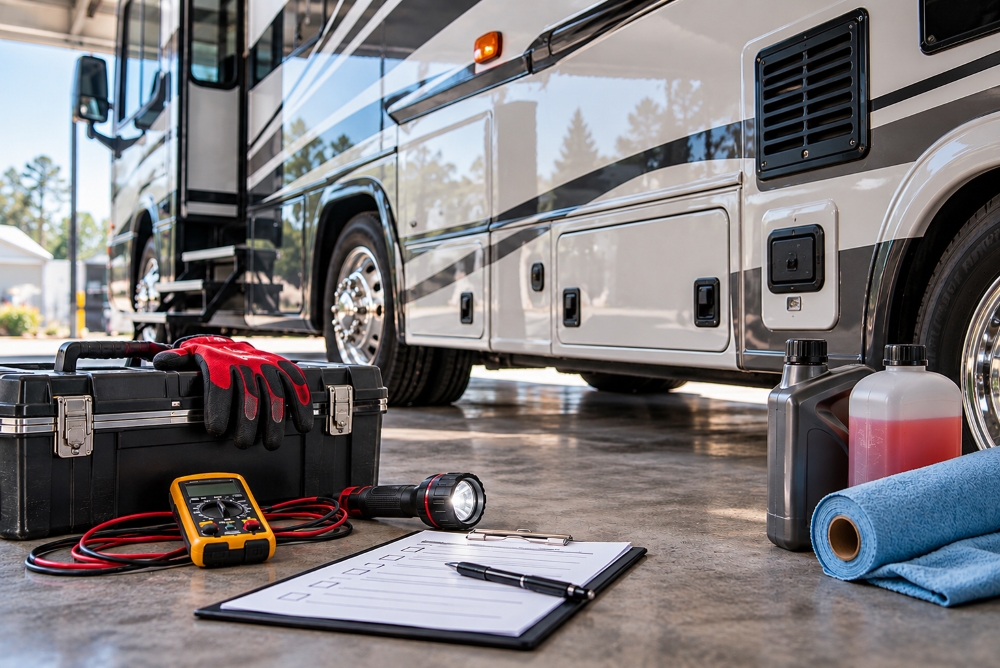
If a problem involves a safety-critical system, goes beyond a basic check, or keeps coming back after troubleshooting, it’s time to have your RV professionally inspected.
Get Your RV Road-Ready in Albany, OR
RV problems are easier to deal with when you catch the warning signs early. Changes in braking, handling, electrical operation, generator performance, heating and cooling, or leveling systems are worth investigating before they turn into bigger problems on the road.
PNW Autowork handles a range of motorhome chassis and coach-system needs, including engine and drivetrain service, Onan generator repair, heating and cooling systems, water heaters, leveling systems, and trailer running gear.
Not sure what’s causing the problem? Book an RV inspection with PNW Autowork today.